The truth is that being a DI athlete requires a lot of hard work—probably more than you realize. And even getting to that level is quite a challenge: with 347 schools across 49 different states, only . 8 percent of high school-athletes go on to compete at DI programs.
What is the hardest sport to go D1 in?
The hardest major sport to play in college? For boys, it's wrestling (2.7 percent), then volleyball (3.3 percent) and basketball (3.5 percent). For girls, it's a tie between volleyball (3.9 percent) and basketball (3.9 percent).
What sport is it easiest to go D1 in?
Lacrosse. This is the easiest sport to get an athletic scholarship. Lacrosse is popular mostly in America, so it has almost no international competition. Based on data, about 110,000 players were involved in lacrosse in high school and more than 14,000 in college.
Is it worth playing a D1 sport?
That being said, there are meaningful benefits to being a Division 1 athlete. It is no secret that D1 schools have more financial backing, generally resulting in better facilities, higher-paid coaches, more scholarship money, and more considerable resources.
How many athletes do you need to be D1?
A total of at least eight active FBS members. To be counted toward this total, a school must participate in conference play in at least six men's and eight women's sports, including men's and women's basketball, football, and at least two other women's team sports.
22 related questions foundWhat GPA do you need to play D1 sports?
The minimum GPA required to compete at the NCAA Division I level is a 2.3 GPA in approved core-courses and earn an SAT score of 900 or ACT sum score of 75 to be eligible.
What's a D3 athlete?
D3, in general, provides a student-athlete with a “normal” college experience while allowing them to still compete in athletics. It's also common for non-athletes to make their college decision based on a school's sports program.
Is being a D1 athlete stressful?
Emerging evidence identifies stressors unique to the college athlete, related to physical and mental health risks. Recent statistics indicate that 95% of male and 85% of female athletes report higher stress compared to 52% of non-athlete students.
What is life like as a D1 athlete?
The experience can be rewarding, fun, exhausting or miserable. You might push yourself to unlock a new level of “potential,” crumble under the pressure or coast your way through those four or more years. Being a D1 athlete might make you feel like a god or a piece of meat.
Can u party as a D1 athlete?
As a student athlete, you are held to a higher standard. You are part of something bigger than yourself. Your ability to party is limited. If you want to do well at your sport, you cannot be out partying every night.
What sport is hardest to go pro in?
Here are the top 5 hardest sports to make it pro in (statistically).
- Ice Hockey. If you enjoy the majesty of gliding over the ice and the thrill of smashing into other adults, you might want to pursue a career in hockey. ...
- Baseball. ...
- Soccer. ...
- Basketball.
What is the hardest mental sport?
Swimming
It may be surprising to most people that swimming is number 1 in the list of the most mentally challenging sports in the world. Many professional swimmers fall into a 7-day self-sabotage cycle.
What sport is the hardest?
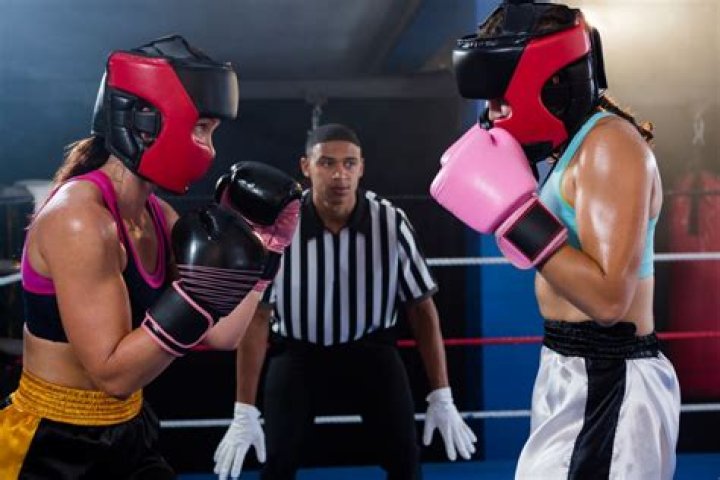
Boxing. The Sweet Science. That's the sport that demands the most from the athletes who compete in it. It's harder than football, harder than baseball, harder than basketball, harder than hockey or soccer or cycling or skiing or fishing or billiards or any other of the 60 sports we rated.
What percent of d1 athletes quit?
Attrition occurs in college athletics at all levels of the NCAA. No matter how much a recruit falls in love with the school, the sport, the facilities nearly 33% will quit or be asked to leave before they graduate. The scenario of quitting or failing is far from unique.
How do you become a d1 athlete?
Earn at least a 2.3 GPA in your core courses. Earn an SAT combined score or ACT sum score matching your core-course GPA on the Division I sliding scale, which balances your test score and core-course GPA. If you have a low test score, you need a higher core-course GPA to be eligible.
What percent of d1 athletes go pro?
Do many NCAA student-athletes go on to play professionally? Fewer than 2 percent of NCAA student-athletes go on to be professional athletes. In reality, most student-athletes depend on academics to prepare them for life after college.
How many hours a day do D1 athletes practice?
Generally speaking, a College athlete will have three hours of classes per day on average. They'll also be at practice for two hours a day, with an hour either side for 'prehab' and rehab.
What do D1 athletes get?
D1 athletes will receive any and every type of gear you can possibly think of. This includes socks, shoes, compression pants, shorts, joggers, sweatpants, undershirts, t-shirts, long-sleeve shirts, polos, rain jackets, sweatshirts, coats, beanies, hats, and any other accessories related to the sport you play.
How much do D1 athletes get paid?
More than $1.5 billion in potential earnings
Division I players have been earning $471 on average, according to Opendorse data, while some of these NCAA athletes earned more money just in the month of July than their yearly tuition.
Do athletes get depressed?
In total, 21% of the athletes surveyed reported symptoms of depression. Freshman athletes and those who endorsed pain reported more depression symptoms in this study.
Do athletes have a lower rate of depression?
Concerning the relationship between sports and mental health, current research suggests that youth who engage in sports have lower levels of self-reported diagnoses of anxiety and depression than those reported by the general population (Jewett et al., 2014).
What percentage of sport is mental?
Studies have shown that between 70 and 85% of successful and unsuccessful athletes can be identified using general psychological measures of personality structure and mood state, a level superior to chance but insufficient for the purpose of selecting athletes.
Should I go D1 or D2?
Is D1 or D2 better? D1 athletes are more competitive, and typically have a better chance of receiving scholarships and going pro in their sport. That being said, D2 athletes have more time to focus on their studies and pursue other interests.
Is Ivy League D1?
All of the major sports conferences, including the Big 10, Big 12, Pac 12, and ACC, are composed of Division I colleges. While Ivy League colleges are Division I, they don't offer athletic scholarships.
What does D1 mean?
D1 consists of the largest schools that also have big budgets to support their athletic programs. It is considered to be the most competitive division with the best athletes and teams. There is a separation within Division 1 as well. You have the high major, mid-major, and lower D1 conferences.