When historians delve into the archive and start sniffing, there are five scents that waft from the annals of the 18th century with particular pungency: rose, fish, ammonia, tobacco and paint. This rich bouquet can tell us a lot about how Georgians saw (and smelled) their world, as we explore over the following pages.
How did ancient people smell good?
Early fragrance concoctions incorporated floral scents like jasmine, rose, iris, lavender, violet, or chamomile, as well as spicy smells from natural materials such as yellow amber, camphor, and cloves.
Did everyone smell bad in the Middle Ages?
But, as town populations continued to rise, the battle became increasingly hard and raw sewage continued to flow into the Thames until the nineteenth century. The towns smelled bad and, by the end of the Middle Ages, it is likely that the majority of people smelled pretty bad too.
How smelly were the Middle Ages?
They were ankle-deep in a putrid mix of wet mud, rotten fish, garbage, entrails, and animal dung. People dumped their own buckets of faeces and urine into the street or simply sloshed it out the window.
What did London smell like in the 1800s?
It had choking, sooty fogs; the Thames River was thick with human sewage; and the streets were covered with mud. But according to Lee Jackson, author of Dirty Old London: The Victorian Fight Against Filth, mud was actually a euphemism. "It was essentially composed of horse dung," he tells Fresh Air's Sam Briger.
42 related questions foundHow was perfume made in the 18th century?
17th and 18th century perfumes fell into two general categories: floral and musky. Floral scents of the time were made from flower oils or waters distilled from blooms such as roses, orange flowers, and jasmine. These scents float near the top of the modern note range.
How was the Great Stink stopped?
The government's response during the early days of the stink was to douse the curtains of the Houses of Parliament in chloride of lime, before embarking on a final desperate measure to cure lousy old Father Thames by pouring chalk lime, chloride of lime and carbolic acid directly into the water.
What did Romans smell like?
In Rome, frankincense, cinnamon, myrrh, and nard, were widely used in Imperial age temples, with frankincense and myrrh being the most popular.
What did they use for deodorant in the 1800s?
Deodorant was introduced in the late 1800s.
The first deodorant that killed odor-causing bacteria was called Mum and it was trademarked in 1888. It was a waxy cream that came in a metal tin and used zinc oxide to fight odor. Back then, deodorant was a fairly novel idea, as most women simply used perfume to smell fresh.
Were Castles clean or dirty?
Castles were very difficult to keep clean. There was no running water, so even simple washing tasks meant carrying a lot of bucketfuls of water from a well or stream. Few people had the luxury of being able to bathe regularly; the community was generally more tolerant of smells and dirt.
How did medieval people deal with body odor?
Asides from normal body odor, it would depend. Bathing was more common than people nowdays think and most Medieval people tried to keep clean as much was reasonable. A richer noble or merchant might also use perfumes or other such things to smell nicer while others would likely smell of their surroundings.
What did ancient battlefields smell like?
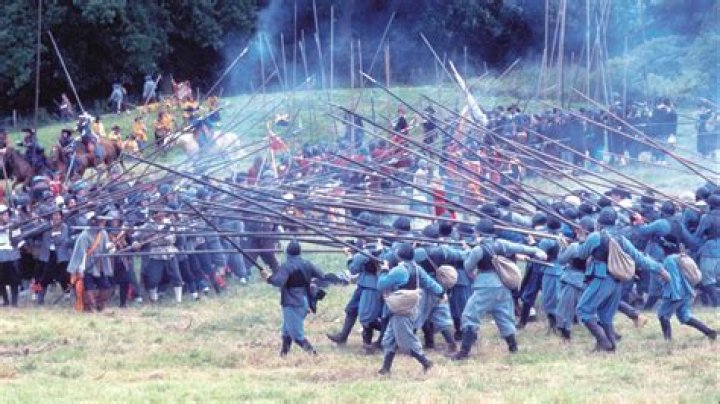
The pungent stench of sulfur wrought by exploding gunpowder dominated the battlefields of the Civil War. With the firing of tens of thousands of muskets and hundreds of cannons, the distinct smell of gunpowder rendered even the most floral landscape a wasteland of rotting eggs.
Did ancient Romans stink?
The ancient Romans lived in smelly cities. We know this from archaeological evidence found at the best-preserved sites of Roman Italy — Pompeii, Herculaneum, Ostia and Rome — as well as from contemporary literary references. When I say smelly, I mean eye-wateringly, pungently smelly. Even the entertainment reeked.
Who invented deodorant?
The first commercial deodorant, Mum, was introduced and patented in the late nineteenth century by an inventor in Philadelphia, Pennsylvania, Edna Murphey. The product was briefly withdrawn from the market in the US. The modern formulation of the antiperspirant was patented by Jules Montenier on January 28, 1941.
When did roll on deodorant come out?
In 1952, inspired by the ballpoint pen, Helen Barnet invented the roll on deodorant, which MUMs promptly began to roll out.
When did Old Spice come out?
Old Spice's first product, introduced in 1937, was actually a fragrance for women. In the 24 years since P&G bought the brand from Shulton, Old Spice grew from a regional label with $100 million in annual sales to a global product with $500 million, according to Chief Financial Officer Jon Moeller.
What did Victorians smell like?
Most fragrances in early to mid-Victorian times were delicate and floral. They were understated, feminine – and often simply conjured up the scent of a particular flower, such as jasmine, lavender, roses, honeysuckle…
What did Romans use for deodorant?
The ancient Romans used a mixture of charcoal and goat fat as deodorant. In the 19th century, lime solutions or potassium permanganate were used. These substances work disinfecting. The first commercial deodorant was patented by Edna Murphey in Philadelphia, PA, USA, in 1888.
What perfume did Romans use?
In Greece and Rome, the abundance of olive oil made it the most popular oil for the perfume industry, though other oils such as almond were popular as well.
Did the Romans have perfume?
Perfumes were very popular in Ancient Rome. In fact, they were so heavily used that Cicero claimed that, "The right scent for a woman is none at all." They came in liquid, solid and sticky forms and were often created in a maceration process with flowers or herbs and oil.
Who cured the Great Stink?
One of the most vocal and well-known supporters of Thames reform was an English chemist and physicist named Michael Faraday. He staunchly supported a complete reformation of the toxic river, so much so that after a boat ride along its surface, he composed and sent a letter to the editor of The Times newspaper.
How did the Great Stink start?
For centuries the River Thames had been used as a dumping ground for the capital's waste and as the population grew, so did the problem. The hot summer of 1858 elevated the stench to an unbearable level and resulted in an episode known as 'The Great Stink'.
How dirty is Thames?
The River Thames has some of the highest recorded levels of microplastics for any river in the world. Scientists have estimated that 94,000 microplastics per second flow down the river in places. The quantity exceeds that measured in other European rivers, such as the Danube and Rhine.
What did perfume smell like in the 1800s?
These perfumes were generally simpler than the ones we know today and consisted, in large part, of florals and other botanicals, such as rose, violet, bergamot, lemon, and lavender. They were rarely applied directly to the skin.
Did they have perfume in the 1700s?
In the late 1700s, the best-selling products available from perfumers in major European cities such as London and Paris included (as one might imagine) scented waters.